Enhancing village-level climate action in Indonesia
Indonesia, an archipelago with over 54,000 kilometers of coastline, is highly exposed to the effects of climate change due to its location at the confluence of the Pacific and Indian Oceans. Its 84,000 villages across 38 provinces contain immense socio-economic and environmental diversity, necessitating tailored climate resilience approaches.
In collaboration with the World Bank and the Government of Indonesia, Akvo set out to enhance village-level climate action by equipping local governments with tailored solutions, fostering collaboration in order to scale initiatives, and boosting evidence-based decision making.
Locations
Indonesia
Sector
Services
Groundtruth data collection
The challenge
Village-level climate actions are vital to Indonesia’s adaptation and mitigation efforts, supported by the Village Law, which grants villages autonomy and increased fiscal resources. Villages play a crucial role in tackling climate challenges through community-specific interventions that directly enhance livelihoods, protect ecosystems, and promote social equity.
Despite Indonesia's village-level approach to climate action, systemic barriers - such as limited technical capacity, insufficient assistance, and weak integration of climate policies - hinder the effective scaling of these efforts. These challenges are compounded by the diverse vulnerabilities of Indonesia’s 74,954 rural villages, ranging from tidal surges in coastal areas to landslides in highlands, emphasising the need for tailored and well-supported interventions.
The solution
In order to ensure robust, evidence-based outcomes for scaling village-level climate actions in Indonesia, we followed a three-pronged approach.
1. Stocktaking of climate actions
This phase began with a comprehensive desk review of over 100 village-level climate actions across Indonesia, analysing data sources such as PODES (Village Potential Statistics), InaRisk, and existing village initiatives. The review focused on identifying scalable and replicable practices aligned with climate adaptation and mitigation goals. These findings were synthesized into a stocktake matrix categorising climate actions by themes such as adaptation, mitigation, feasibility, and impact potential.
2. Ground truthing
Building on the desk review, this phase involved conducting field research in 10 selected villages across diverse landscapes to validate findings and gather deeper insights into the social, technical, and environmental dynamics of village-level climate actions. Akvo, supported by Kopernik, used methods such as focus group discussions, interviews, and on-site assessments to refine the stocktake and ensure the identified actions were grounded in local realities.
3. Feasibility and recommendations
The final phase consolidated all findings into feasibility assessments, which provided actionable recommendations for scaling village-level climate actions. These assessments addressed key barriers while emphasising capacity-building, gender and social inclusion, and alignment with Indonesia’s national climate goals. The outputs also included programme design principles, budget frameworks, and a roadmap for integrating climate actions into village governance systems.
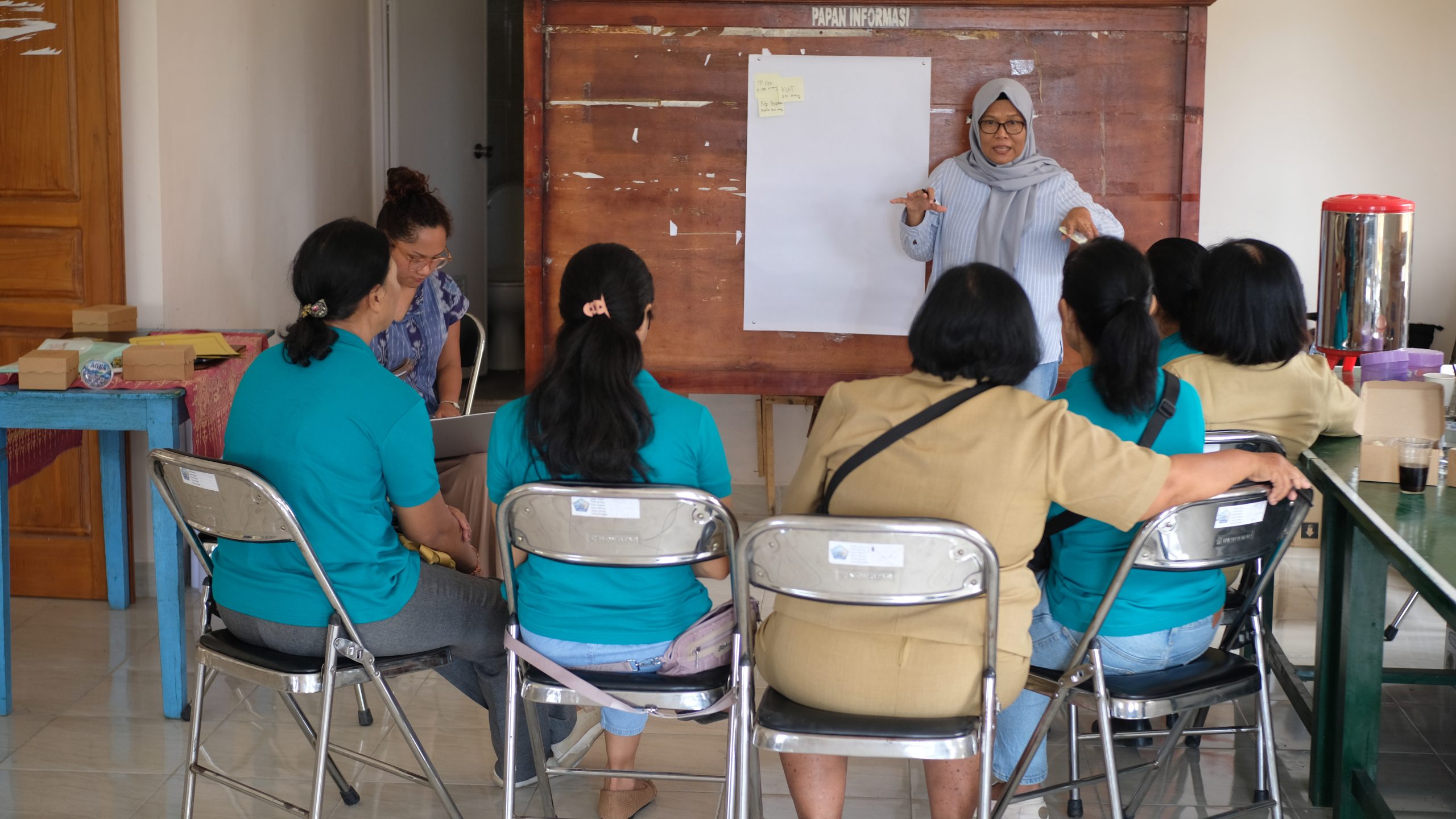
Above: Climate workshop in Indonesia
The impact
The Village Climate Action project directly enhanced Indonesia's climate resilience by enabling evidence-based decision-making at the village level, equipping local governments with tailored solutions to address climate vulnerabilities, and fostering sustainable development through inclusive, scalable, and high-impact climate actions aligned with national and global priorities.
Do you want to know more about Akvo’s climate action solutions?
Our regional hubs
Our services
Tech solutions
Our expertise
We apply the principles of open source software, open content and open data to all of our work.
Find out why and how.